
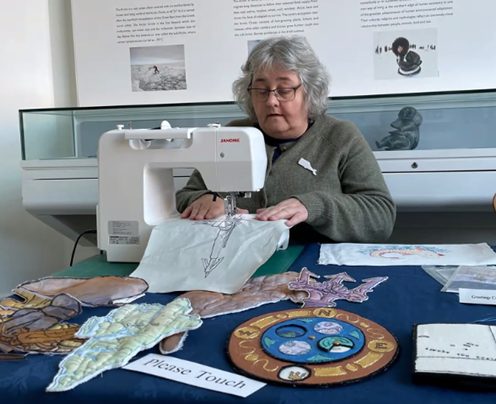
Caroline Hack’s recent presentation to our Guild offered a fascinating glimpse into a truly distinctive textile practice—one that brings together embroidery, maps, and maritime history in unexpected and compelling ways.
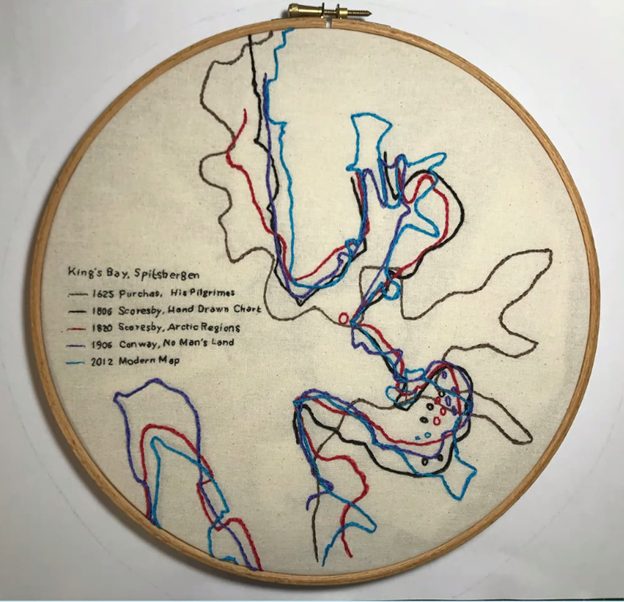
Based in the UK, Hack came to textiles later in life, transitioning from a background in plant science and printmaking into what has become a deeply research-driven artistic practice. Her work is inspired largely by Moby-Dick and the history of British Arctic whaling—an unusual and highly specific focus that she embraces fully. Through extensive travel and residencies, from Shetland to the Arctic and Atlantic Canada, she gathers both material and inspiration, often returning with a rich collection of maps.
Maps sit at the heart of Hack’s work. They are not just visual elements, but storytelling tools—used to locate remote histories, explore shifting place names, and reflect on broader themes such as ownership and colonial perspectives. Whether historic navigation charts, geological surveys, or tourist maps, each becomes a foundation upon which she layers stitch, imagery, and narrative.
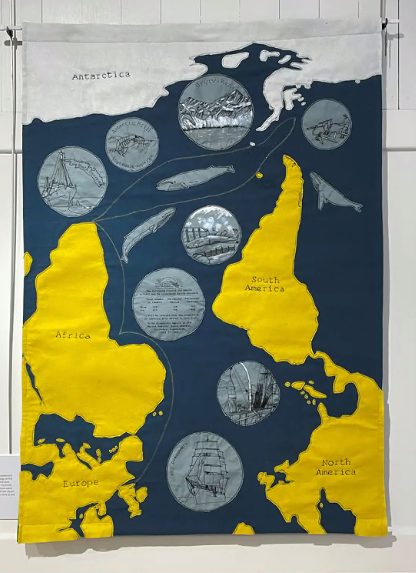
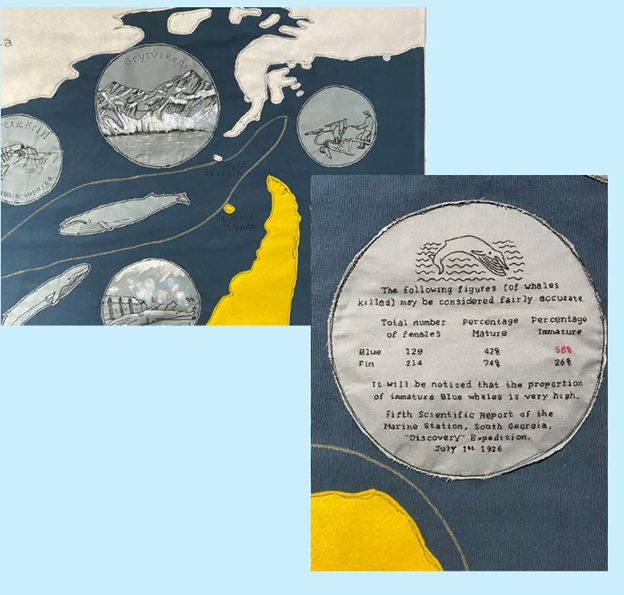
Her pieces combine hand and machine embroidery, appliqué, and digitally printed fabric, often constructed in sections and assembled into larger works. Despite their complexity, Hack emphasizes that her techniques are accessible, encouraging experimentation and a hands-on approach to learning.
What stands out most is how seamlessly she blends disciplines. Her work moves between art, science, and history, sometimes quietly addressing environmental concerns such as the impact and sustainability of whaling. At the same time, she brings a strong sense of curiosity and play to her process—testing ideas, solving problems as they arise, and allowing the work to evolve organically.
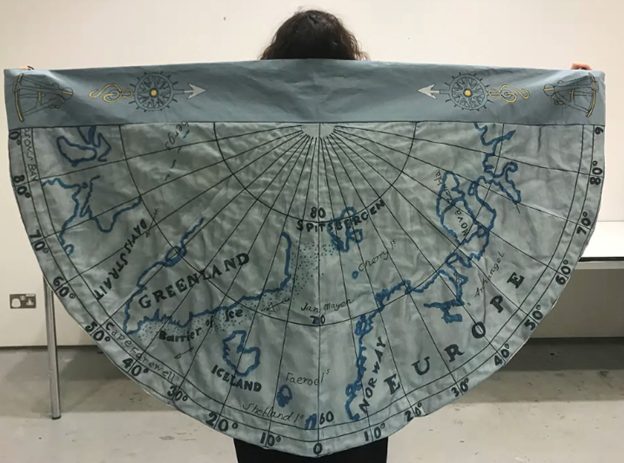
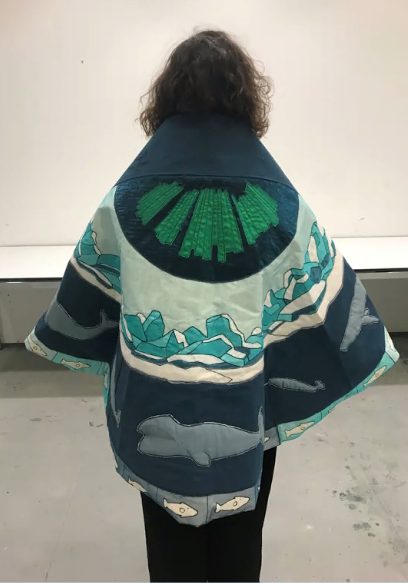
Equally important is her commitment to public engagement. Through informal “meet the artist” sessions, Hack invites viewers to handle and explore her textiles—an experience that is often discouraged in gallery settings. This tactile openness not only demystifies her process but creates meaningful, memorable connections with audiences of all ages.
Ultimately, Caroline Hack’s work reminds us that textiles can do far more than decorate—they can map stories, hold histories, and invite us to see the world, quite literally, from a different perspective.
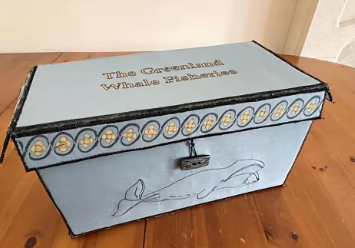
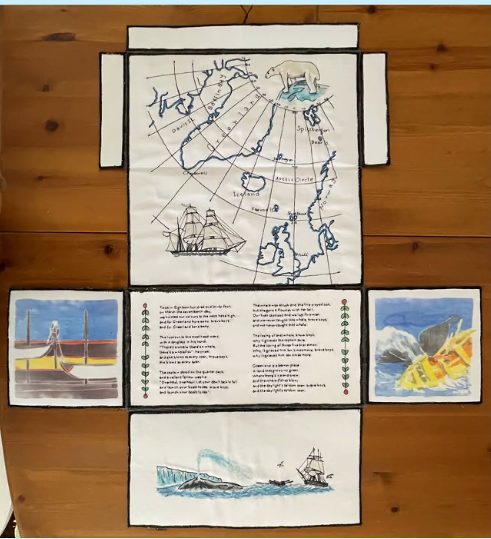
Thank you Caroline for an engaging, thoughtful, and comprehensive look at your studio practice and its resulting work!
Note: All pictures are by Caroline Hack and are used with permission.