
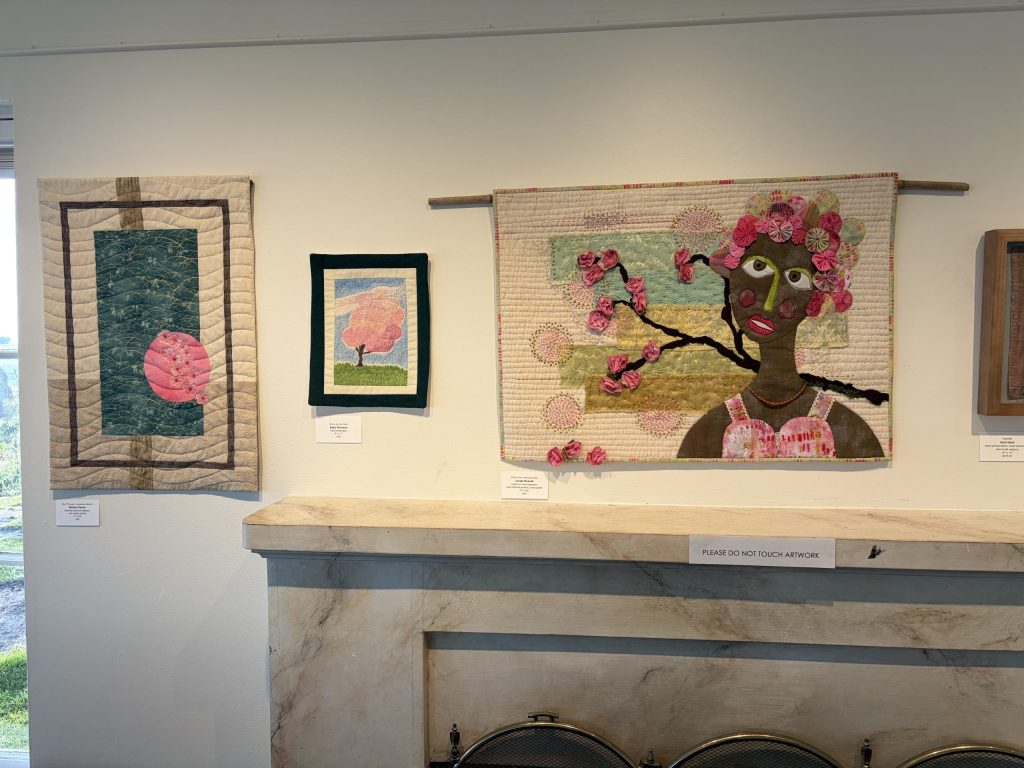
In a world that moves fast and speaks loudly, needlework asks us to slow our hands, to listen, to notice. And when that practice is shared—across tables in community halls, libraries, living rooms, or even over video calls—it becomes something more than craft. It becomes connection.
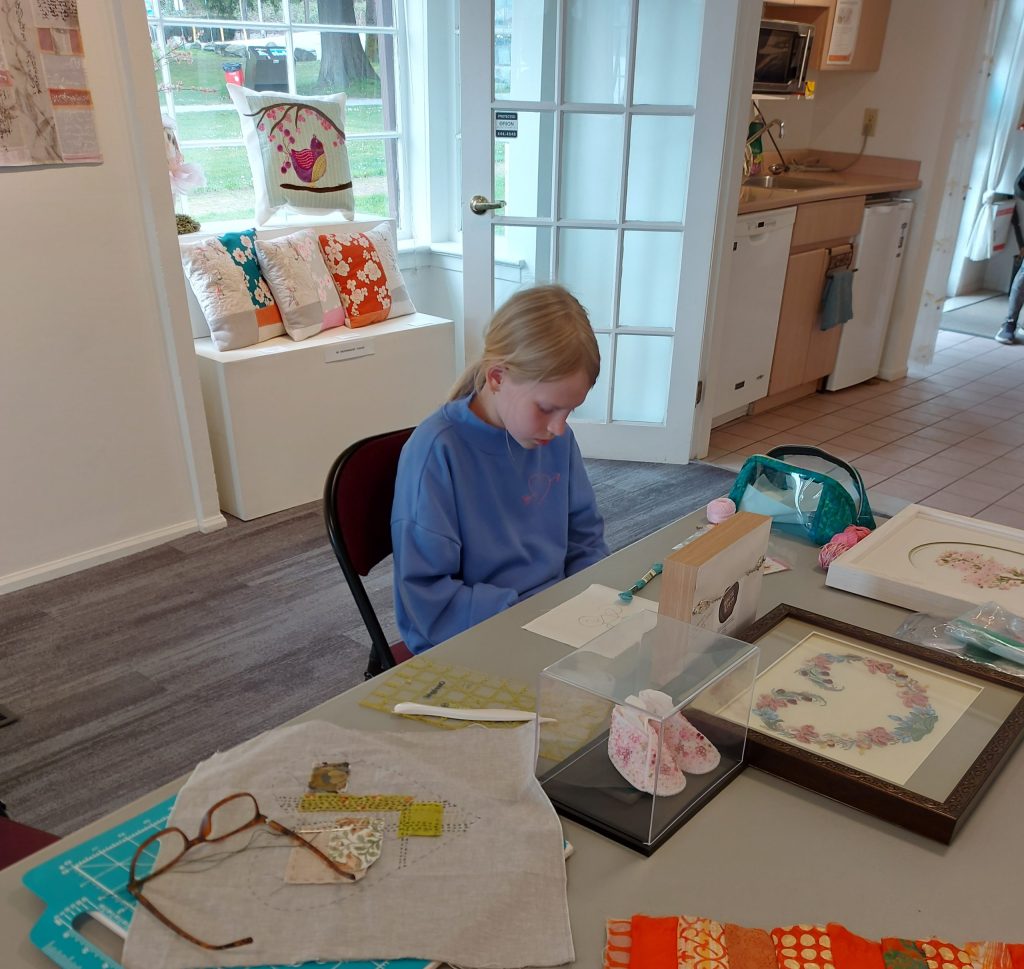
This is something the North Shore Needle Arts Guild (NSNAG) understands deeply. Through its outreach efforts, the Guild has shown how a simple invitation to stitch can open doors between generations, cultures, and communities. At a recent exhibit at the Silk Purse Art Centre hosted by FibreEssence and Vancouver Guild of Fibre Arts, many members of NSNAG take the opportunity to display their work and be demonstrators of our techniques during the exhibit. Our participation is one example of this kind of community outreach—bringing textile art into a public, welcoming space where stories, skills, and curiosity could meet.
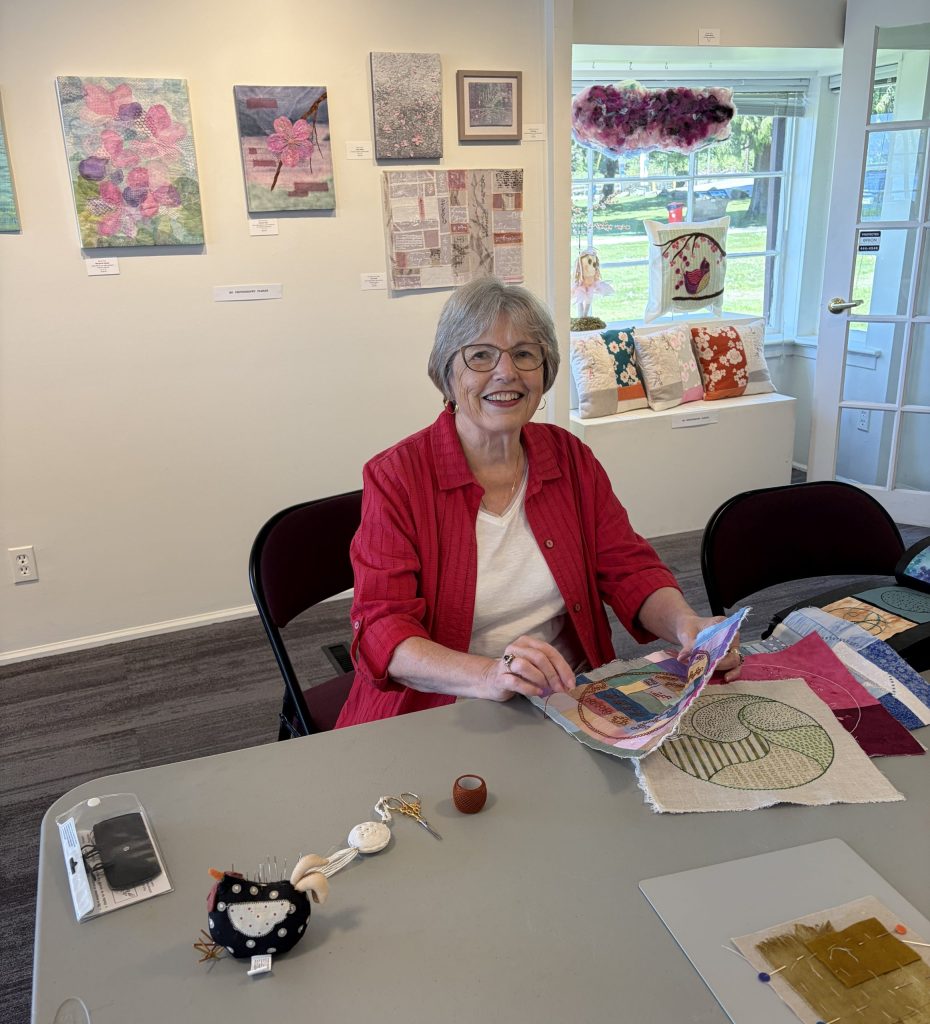
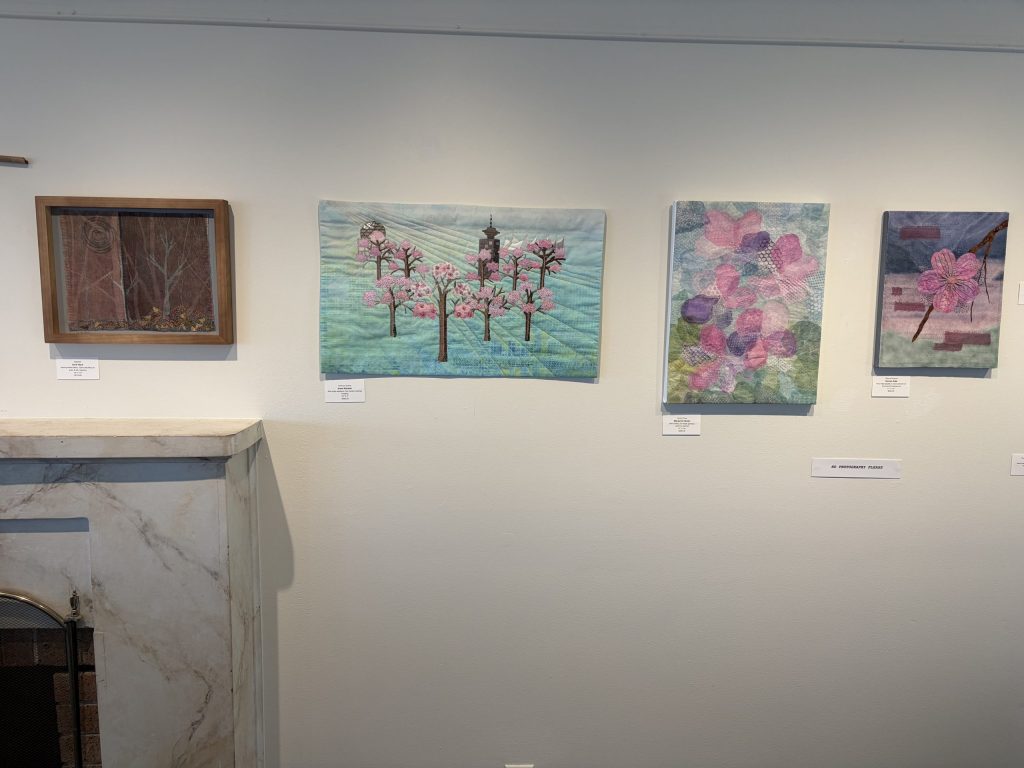
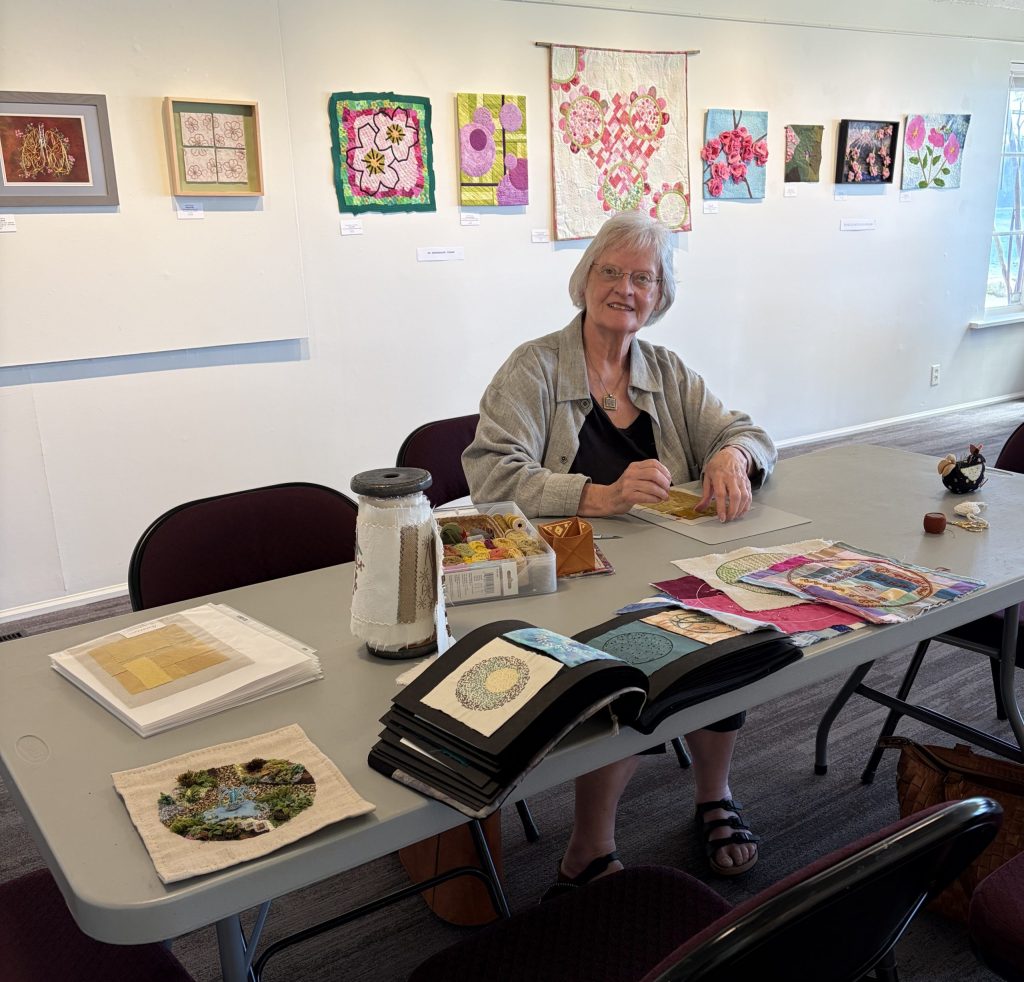
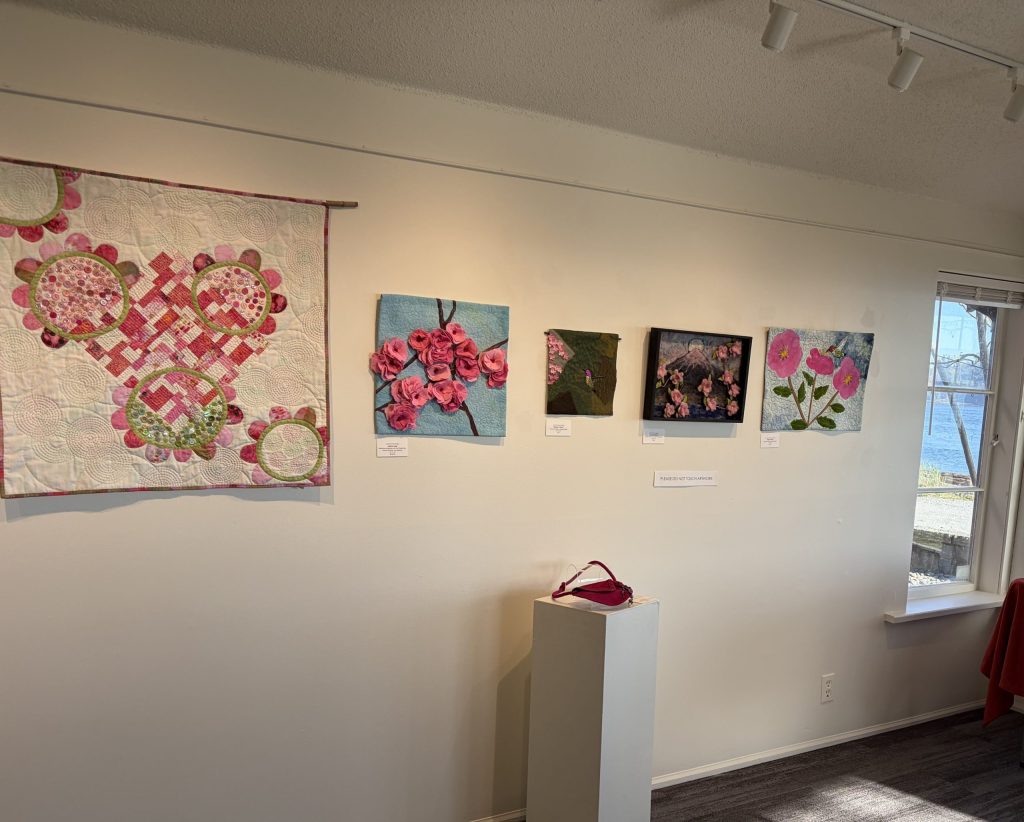
Community outreach through needlework and embroidery isn’t new, but it feels newly important. These are accessible, low-barrier art forms: a needle, some thread, a scrap of fabric. You don’t need expensive equipment or formal training to begin. What you do need—what makes all the difference—is someone willing to sit beside you and say, “Let me show you how.” which is just what our members did during demos given at the Silk Purse.
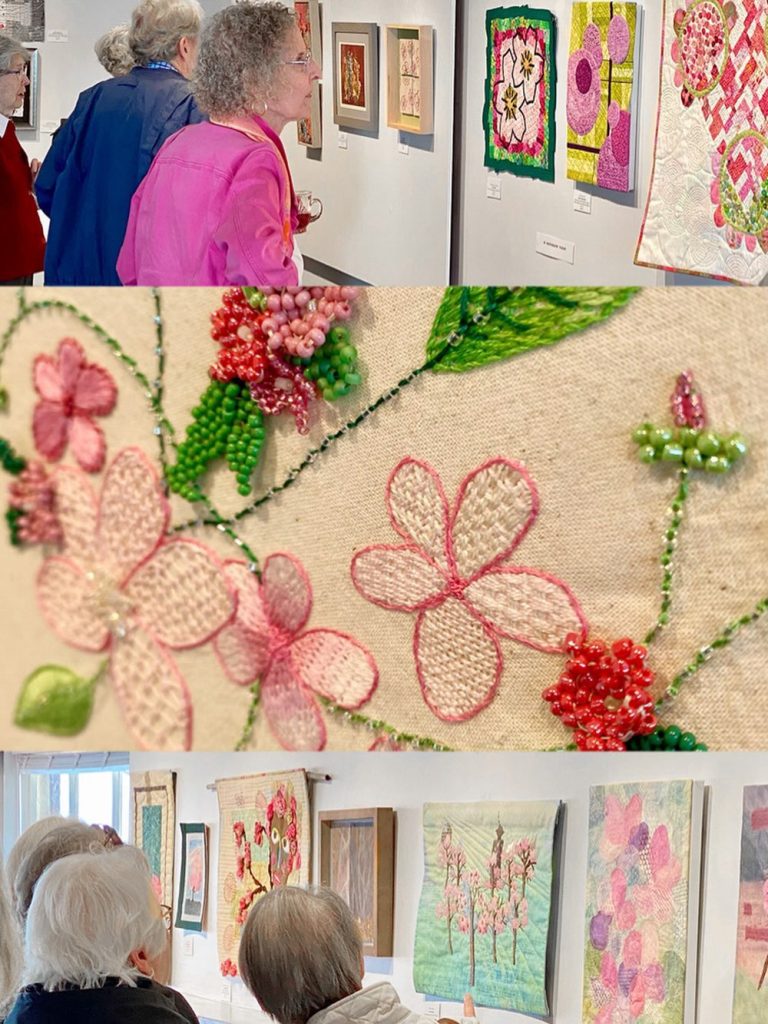
And that’s where outreach begins.
Through workshops, demonstrations, and community displays, groups like the North Shore Needle Arts Guild have helped create spaces where people feel welcome to try, to learn, and to share. Seniors pass on decades of skill to younger participants. Newcomers introduce embroidery traditions from their home countries, bringing unfamiliar stitches, patterns, and stories into the mix. Teenagers discover, often with some surprise, that working with their hands can be both calming and expressive. Our work with Girl Guides shown here is an example of that exuberance.
There’s also a unique kind of storytelling embedded in needlework. Unlike digital media, embroidery holds time within it. Each stitch marks a moment of attention. When people gather to stitch, they don’t just share techniques—they share narratives. A pattern might recall a grandmother’s tablecloth. A color choice might carry cultural meaning. A piece of fabric might come from a worn shirt, now repurposed into something enduring.
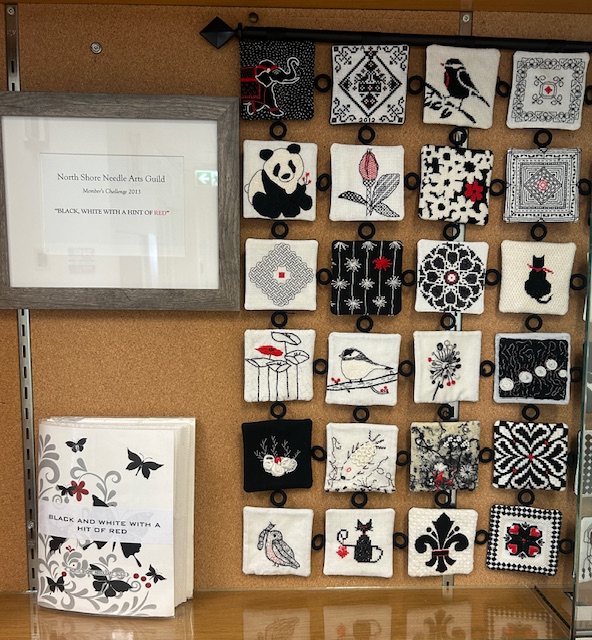
Outreach projects led or inspired by groups such as the North Shore Needle Arts Guild often tap into this storytelling power. At the Lions Gate Hospital Palliative Care unit, this approach takes on a particularly meaningful dimension. In its 7th floor display cabinet, shared textile and needlework—created by many hands—comes together as a quiet, collective presence within the space. This work created in 2013 by our members as a collaborative piece is such an example.
These works, layered, diverse, and deeply personal, become more than visual records of a community’s identity; they become companions in a setting where reflection and comfort matter deeply. Displayed within the cabinet, they invite patients, families, and staff to pause, to take in the subtle details, and to feel the care stitched into every piece. The softness of fabric, the rhythm of repeated stitches, and the sense of many contributors working together all help to create a calming, contemplative atmosphere.
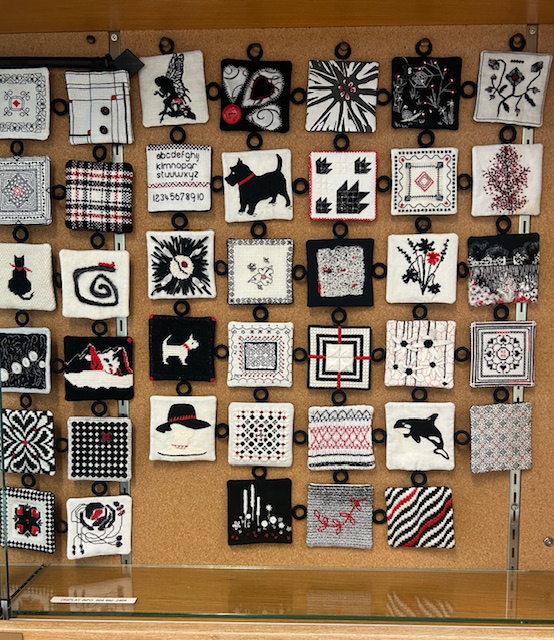
In this context, embroidery moves beyond craft. It becomes a form of gentle outreach—offering connection, dignity, and a quiet reassurance that even in the most tender of spaces, community is present.
There’s a practical side, too. For many participants, especially seniors, these programs offer more than creative engagement. They provide structure, social contact, and a renewed sense of purpose. Teaching a stitch, finishing a piece, contributing to a group project—these are small but meaningful achievements that counter isolation and reinforce the value of lived experience.
Successful outreach doesn’t require perfection. In fact, it thrives in spaces where mistakes are welcome, where uneven stitches are part of the process, and where the emphasis is on participation rather than polish. What matters most is the invitation—the open door, the shared table, the willingness to begin.
The work of the North Shore Needle Arts Guild is a reminder that community building doesn’t always happen through grand gestures. Sometimes, it begins with something as simple—and as powerful—as a needle, a thread, and the act of sitting down together.