
What is it about certain subjects, materials or techniques that keeps us coming back to them? For textile and mixed-media artist Rachael Singleton, these recurring fascinations are what she calls being “curiously captivated.”
Rachael sees a difference between being curious about something and being captivated by it. Curiosity makes us wonder, while being captivated encourages us to stay with an idea—to experiment, explore and see where it leads. This approach is very evident in her textile work, where she combines hand stitching, fabric, paper, found materials, wire, beads and other unexpected elements.
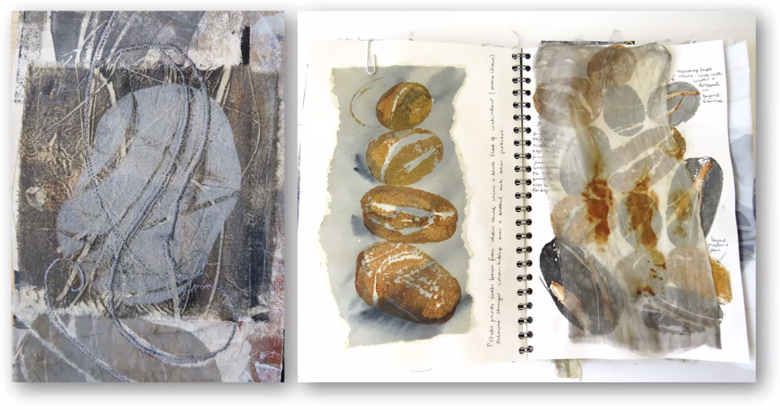
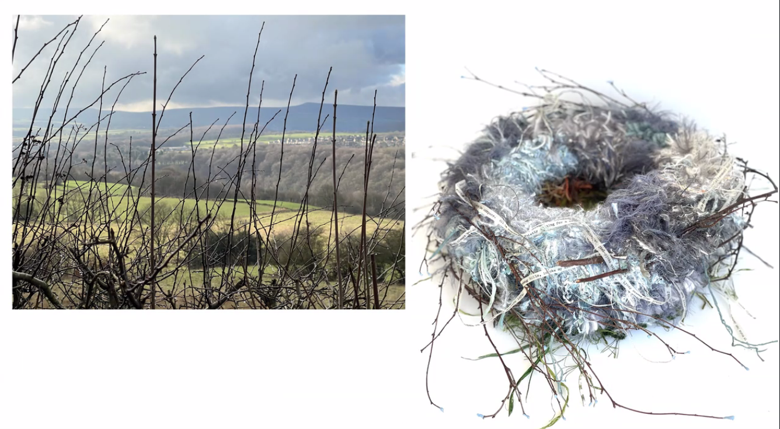
Her fascination with the natural landscape is particularly evident. Living in Yorkshire, surrounded by stone walls and rugged countryside, Rachael has spent years observing the textures and patterns found in stones, grasses, feathers, seaweed and other natural forms. These observations have inspired everything from stitched textiles and tiny vessels to elaborate landscape-inspired nests.
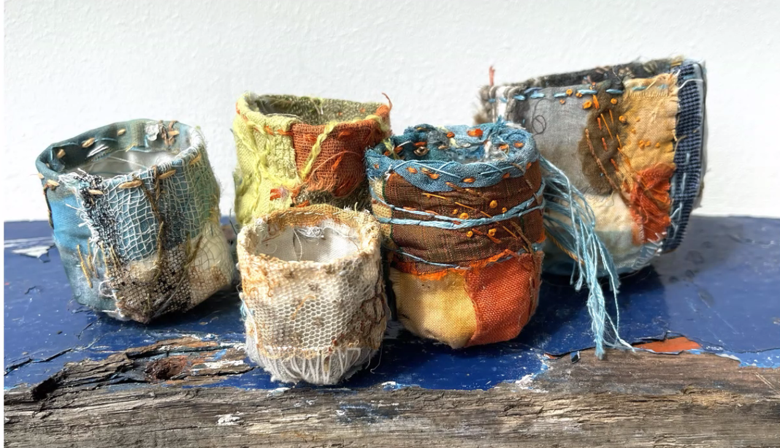
Hand stitching plays an important role in Rachael’s creative practice. She describes it as comforting and grounding, particularly when working repetitively. Her tiny stitched pots are a wonderful example. She has created approximately 160 of these small vessels, using scraps of fabric and layers of stitching to capture memories of places, landscapes and experiences. What began simply as something she felt compelled to make eventually revealed a deeper meaning: each little pot seemed to provide a sense of safety and contain a small piece of herself.
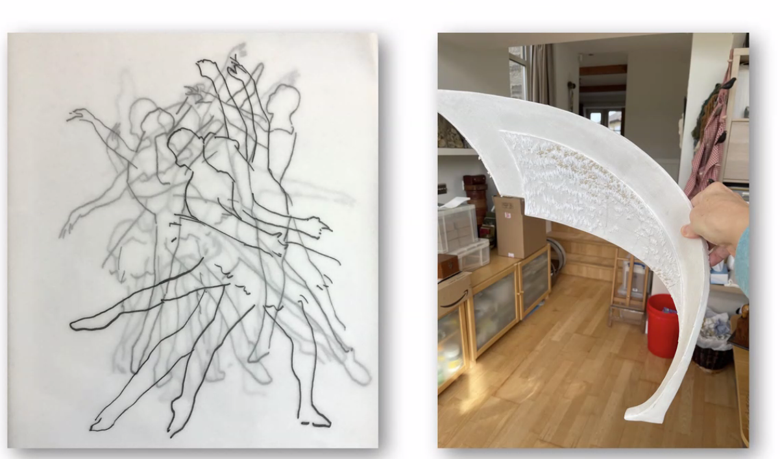
Rachael also demonstrated how needlework can cross boundaries between textile art and other media. In Holding the Line, she created a stitched textile form inspired by ballet, exploring ideas of restriction, movement and prescribed roles. The textile piece was subsequently transformed into a bronze sculpture, giving Rachael the opportunity to discover how stitching, line and form could be translated into another material.
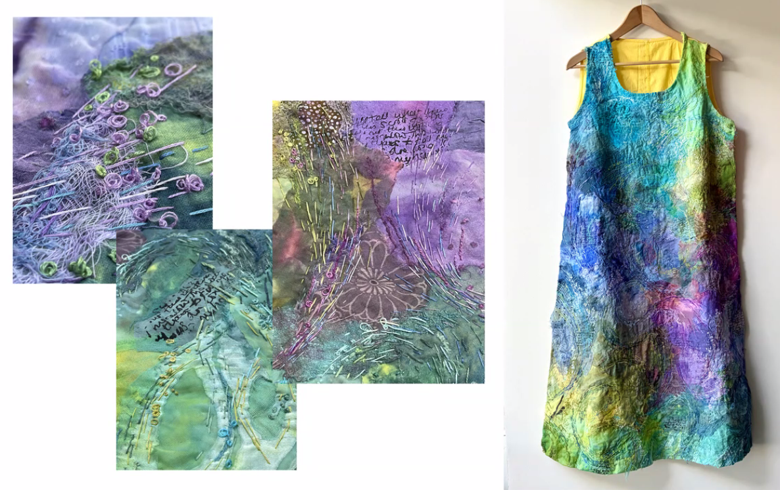
Perhaps the most touching example of Rachael’s approach is her current yellow dress project. A bright yellow dress recalls an uncomfortable childhood experience when she felt painfully conspicuous among her classmates. Rather than simply remembering that moment, Rachael is reclaiming it through stitch—covering the dress with layers of colourful embroidery and transforming an awkward memory into something meaningful and creative.
Throughout her presentation, Rachael reminded us that needlework does not always begin with a clear plan. Sometimes we simply find ourselves fascinated by a particular stitch, fabric, texture, colour or subject. We follow it, experiment with it, and see where it takes us. Some ideas flourish; others are eventually set aside.
For those of us who work with needle and thread, there is something wonderfully familiar about this process. A piece of fabric catches our eye. A particular stitch becomes irresistible. A scrap of thread suggests a possibility. A memory finds its way into our work.
Rachael’s Curiously Captivated presentation was a wonderful reminder to pay attention to those fascinations—and to give ourselves permission to follow them.
After all, sometimes the smallest thread can lead us somewhere quite unexpected. Thank you Rachael!