
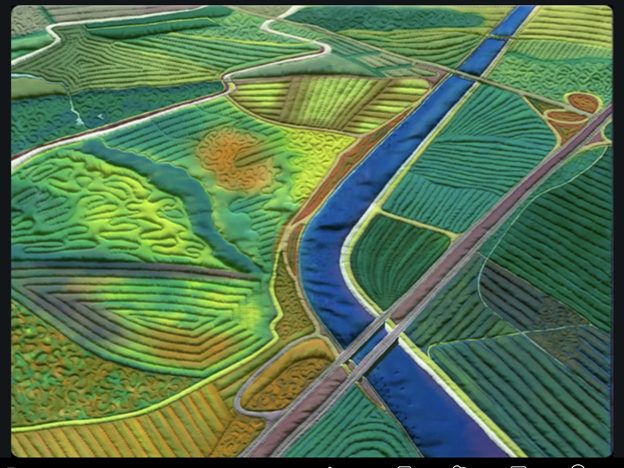
Members of North Shore Needle Arts were treated to a remarkable presentation by textile artist Linda Gass, whose work combines art, science, mapping, and environmental storytelling. Based in the San Francisco Bay Area, Gass creates intricately stitched silk landscapes that explore climate change, water systems, wildfire, wetlands restoration, and sea level rise across California and the American West.
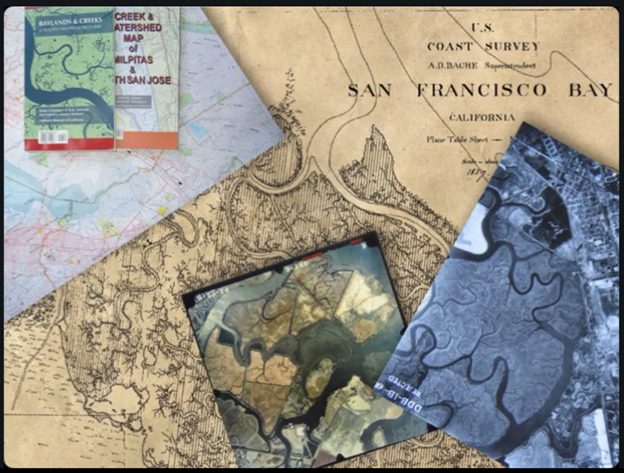
Originally trained in mathematics and computer science at Stanford University, Gass spent a decade working in software before transitioning full-time into art. Her scientific background remains deeply woven into her creative practice. Each artwork begins with extensive research that includes historical maps, satellite imagery, scientific publications, field visits, and conversations with scientists and Indigenous communities. From this research, she develops layered textile works that are both visually stunning and deeply informative.
Throughout the presentation, Gass spoke about her fascination with water systems and how human intervention reshapes the landscape. Growing up in drought-prone Los Angeles sparked early questions about where water comes from and how cities sustain themselves in dry climates. Those questions eventually evolved into a lifelong artistic exploration of environmental change.
A recurring theme in her work is the power of maps—not only as navigational tools, but as political and psychological documents that shape how we understand land, borders, and resources. She reflected on how maps influenced her thinking from childhood and demonstrated how she uses mapping as both a visual language and a research framework in her art.
We were especially captivated by her series examining the wetlands of San Francisco Bay. Using bird’s-eye perspectives painted on silk and enhanced with machine stitching, Gass illustrated the transformation of wetlands into industrial salt ponds and urban development, while also imagining their future restoration. Her work balanced environmental concern with hope, showing how damaged ecosystems can recover over time.
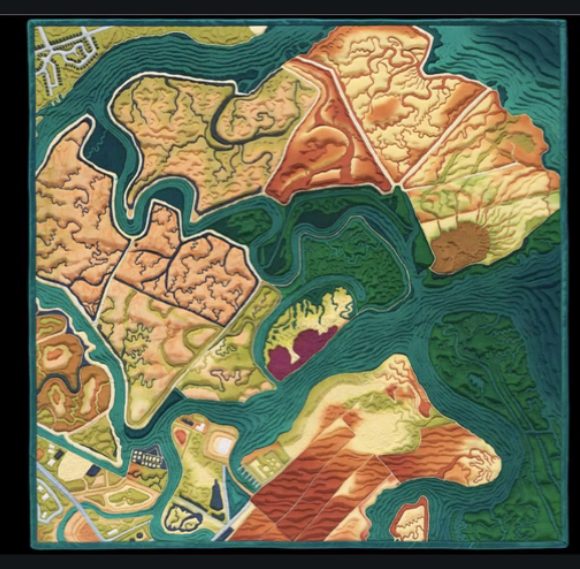
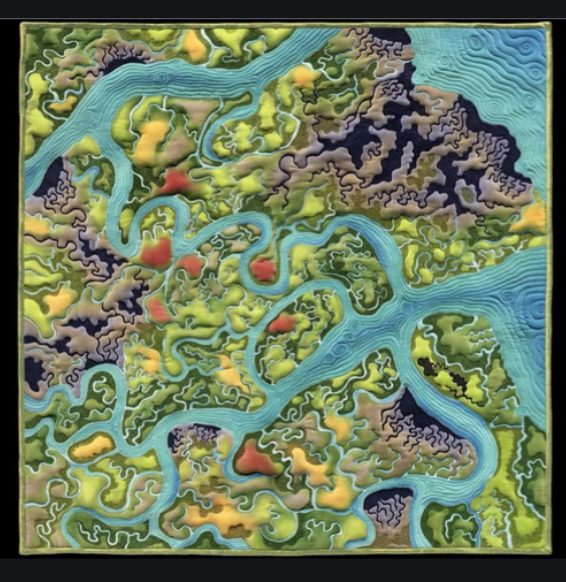
Images above show industrial salt ponds and urban development on the left, envisioning future restoration on the right.
Another compelling body of work explored the history of San Lorenzo Creek, tracing its transformation from a naturally meandering waterway into a concrete flood-control channel surrounded by suburbs. By layering historical maps, aerial photography, and present-day satellite imagery, Gass revealed how urban development dramatically altered natural waterways and groundwater systems.
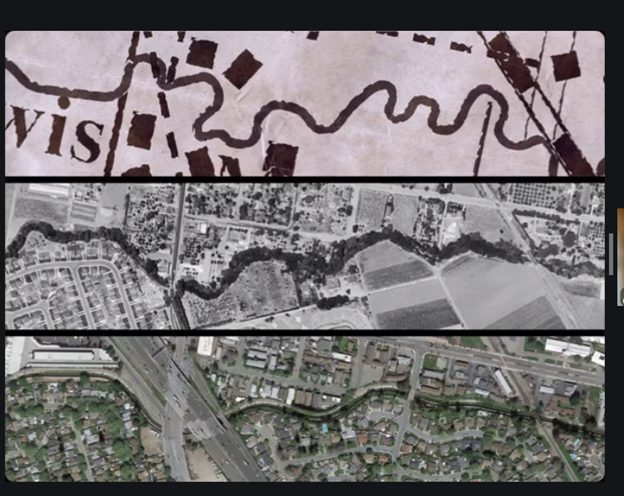
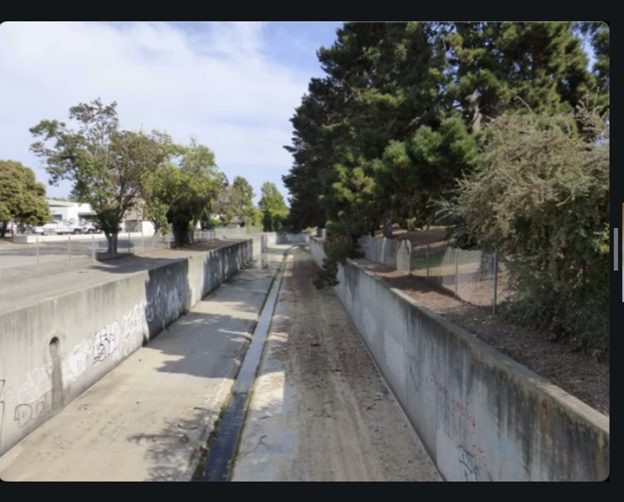
The images above show on the left a map of the course of San Lorenzo Creek; from top in 1946 to 1973 to 2019. The image on the right shows the current San Lorenzo Creek encased in concrete.
The presentation also delved into her climate-focused works on sea level rise and wildfire. One striking triptych visualized projected flooding in San Francisco’s Dogpatch neighbourhood under varying sea level rise scenarios, using scientific data from NOAA and California climate projections. Another series focused on the devastating Rim Fire in California’s Sierra Nevada watershed, translating burn severity maps and topographic data into richly textured stitched landscapes.
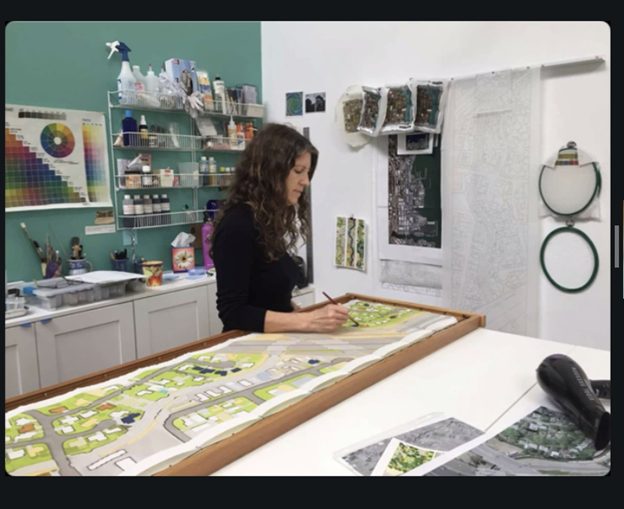
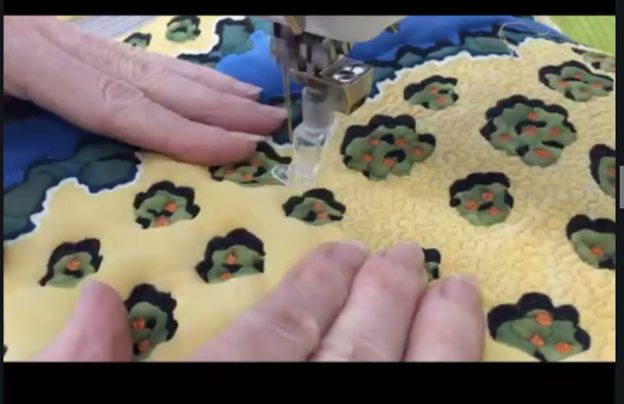
Guild members were fascinated not only by the environmental narratives, but also by Gass’s artistic process. She generously shared detailed insights into silk painting, dye mixing, resist techniques, machine stitching, and digital manipulation. Time-lapse videos of her studio practice revealed the extraordinary patience and precision behind each piece.
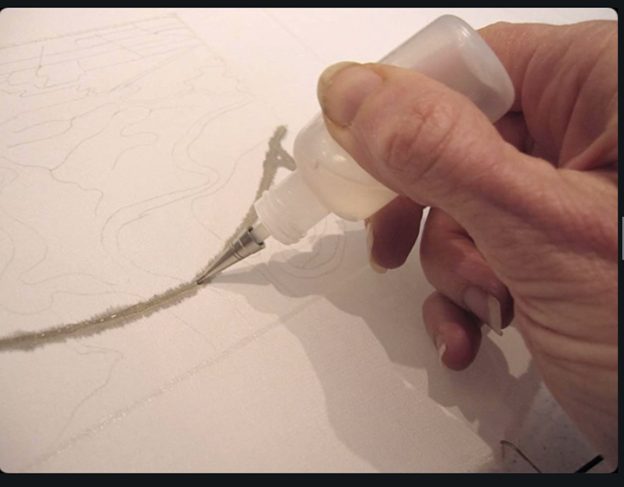
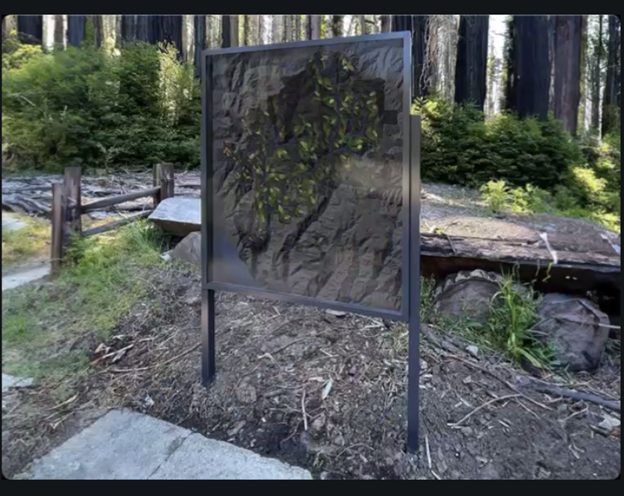
In recent years, Gass has expanded her practice into public art installations. She described a residency at Big Basin Redwoods State Park following the devastating CZU Lightning Complex fire. There, she created a permanent outdoor artwork combining printed metal and glass layers to map both burn severity and forest regrowth. The piece reflects not only devastation, but also resilience and renewal within the forest ecosystem.
The discussion that followed highlighted how deeply the presentation resonated. Members praised the clarity of her research, the generosity with which she shared her methods, and the way her art communicates complex environmental issues to wider audiences. Several participants commented on the powerful intersection of science and art in her work, noting how beauty can invite viewers into difficult conversations about climate change and ecological loss.
Gass herself described beauty as a “lure” that encourages people to engage with challenging subjects. Rather than creating confrontational imagery, she seeks to draw viewers in with colour, texture, and craftsmanship, allowing the environmental message to unfold gradually through curiosity and reflection.
The presentation was both inspiring and thought-provoking—a masterclass in research, storytelling, and textile innovation that demonstrated how art can deepen our understanding of the changing world around us.
To view more of Gass’s work you may visit her website here.
NOTE: All photographs in this post are those of the artist, Linda Gass, and used with permission.