
Our season of map studies concluded on a high note with a fascinating presentation by textile artist Bettina Matzkuhn, whose innovative work combines embroidery, cartography, ecology, weather science, and storytelling.
Bettina shared how her lifelong love of textiles began in childhood and has evolved into a unique artistic language. Rather than viewing embroidery simply as a craft, she approaches it as a means of communication—a way to express ideas that cannot be conveyed through other media. Drawing inspiration from her parents—her father’s passion for sailing and navigation and her mother’s love of making things by hand—Bettina has developed an artistic practice that bridges personal history, scientific inquiry, and environmental awareness.
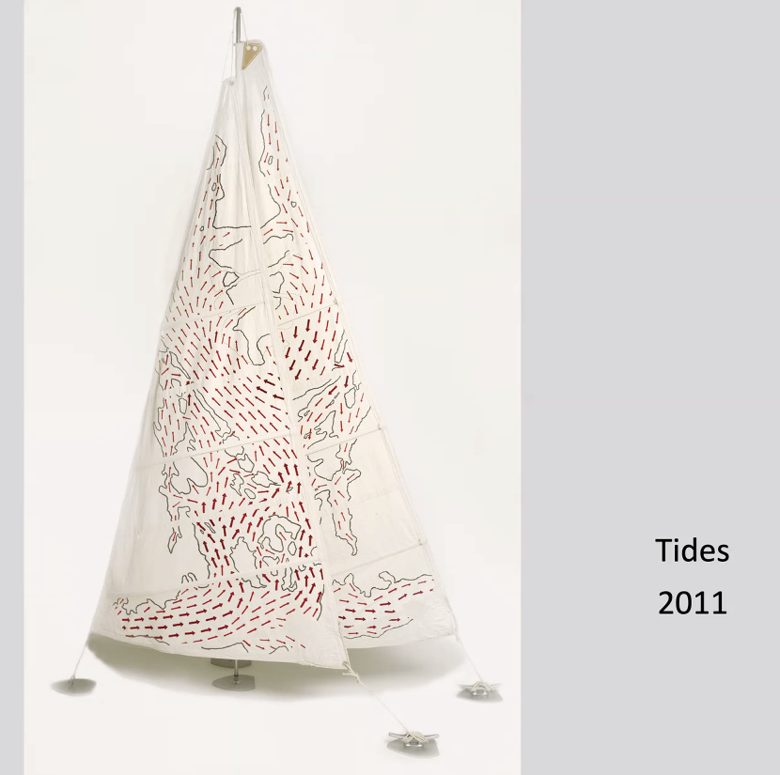
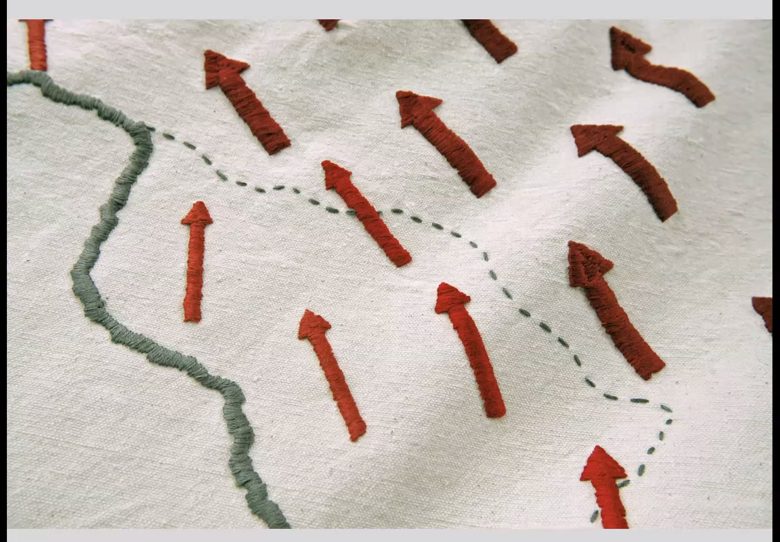
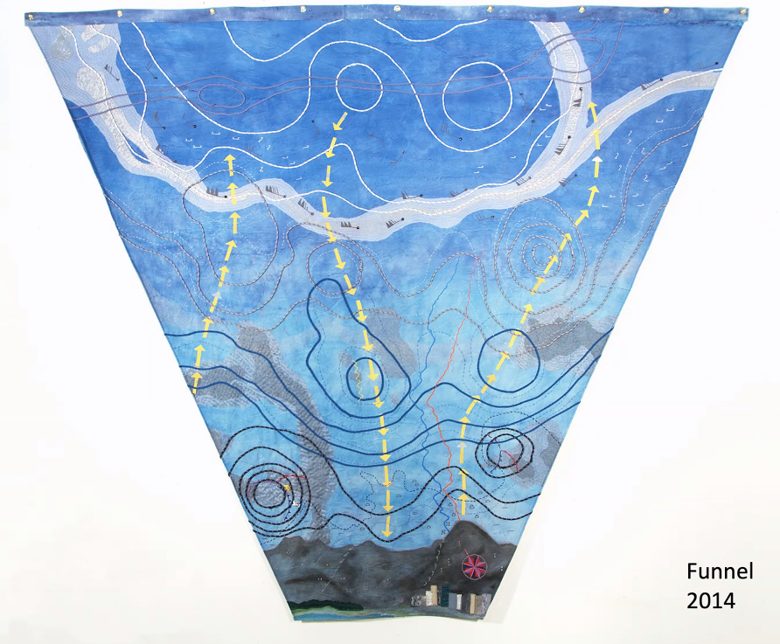
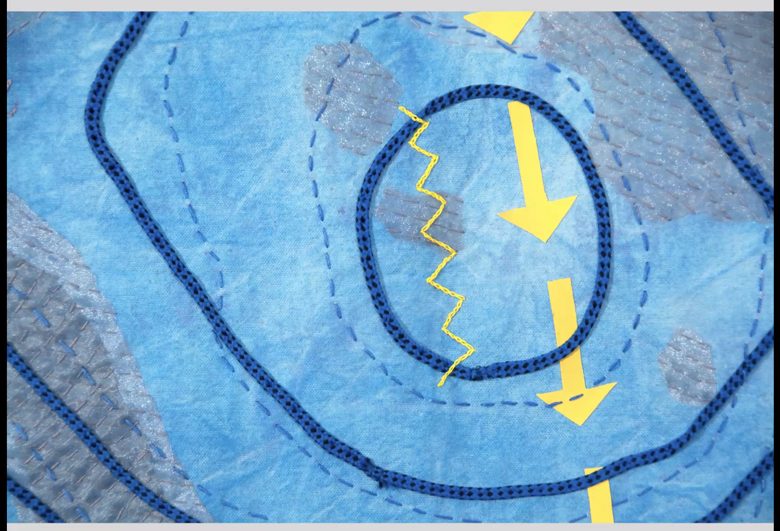
One of the most moving projects she discussed was a series of monumental embroidered sails created in memory of her father. Working with a professional sailmaker, she learned how sails are constructed and tailored before transforming them into large-scale artworks. Among these pieces was a stunning “cloud atlas” that reflected her growing interest in weather systems and forecasting. The project led her to collaborate with a meteorologist, whose explanations of atmospheric mapping inspired a dramatic suspended textile installation based on the “funnel” process meteorologists use to interpret weather data.
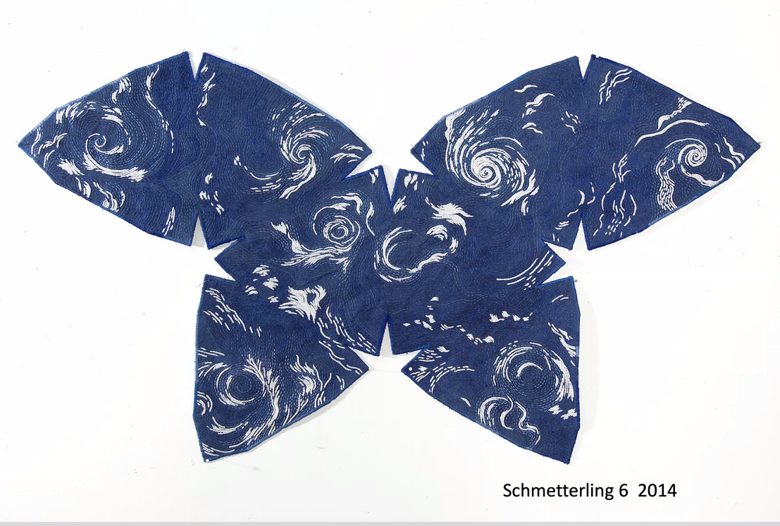
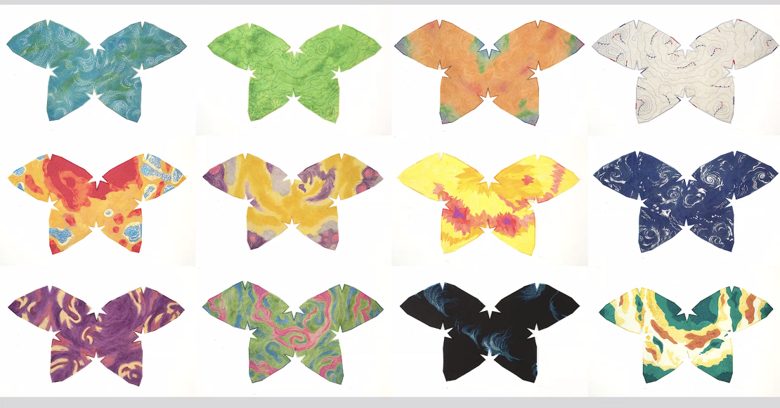
Maps have become a recurring theme throughout Bettina’s work. She described a series of embroidered “butterfly” world maps based on an innovative globe projection that unfolds into a butterfly shape. These large textile pieces incorporated data showing weather patterns, hurricanes, temperatures, and atmospheric conditions. At first glance, viewers often see delicate butterflies pinned to a wall; only upon closer inspection do they realize they are looking at representations of the Earth itself, prompting reflection on the fragility of our planet.
Environmental concerns are central to much of Bettina’s recent work. Inspired by wildfire seasons in the Rocky Mountains, she created glowing textile landscapes that capture both the beauty of mountain scenery and the unsettling presence of smoke and fire. Through experimentation with fabrics, paints, and layered materials, she achieved a subtle orange glow that suggests the hidden threat of wildfire beyond the visible landscape.
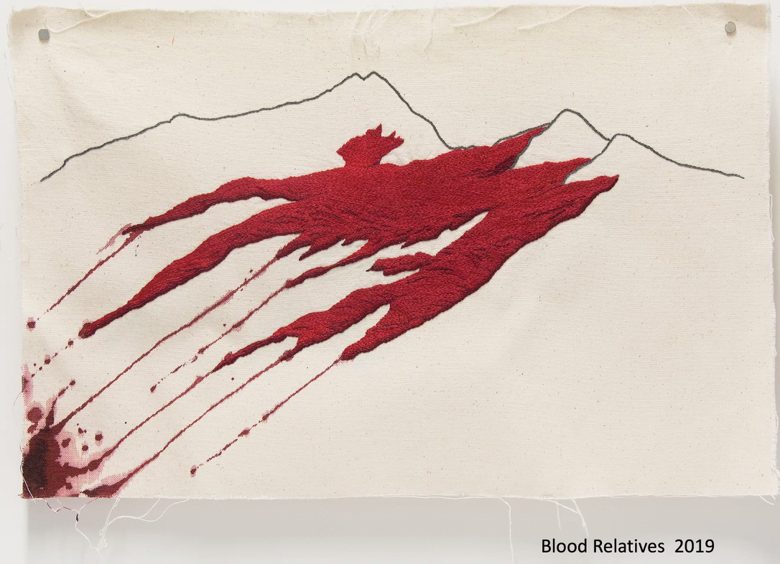
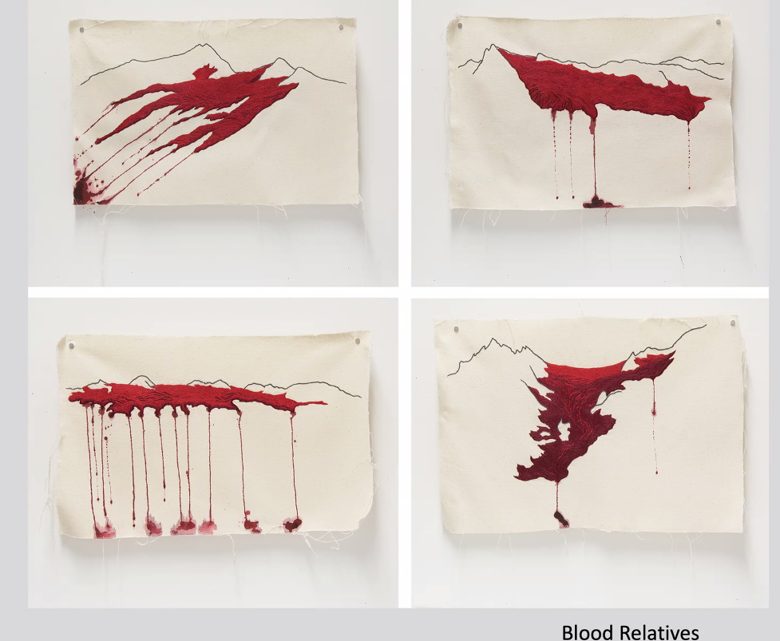
Another powerful body of work focused on glaciers. Following artist residencies in the Yukon and experiences observing rapidly retreating ice fields, Bettina created embroidered pieces depicting glaciers as living entities. Through carefully chosen fabrics and paint techniques, the works evoke glaciers that appear to bleed and suffer, drawing attention to the impacts of climate change and the dramatic loss of ice occurring across northern landscapes.
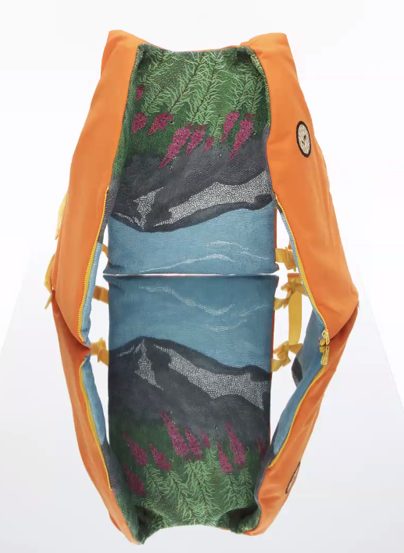
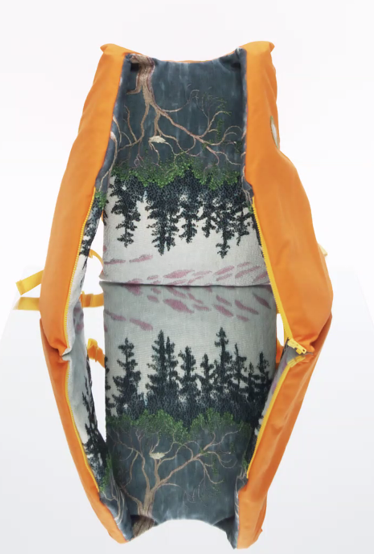
Her wilderness experiences have also inspired a remarkable series incorporating used backpacks and camping gear. After participating in a canoe expedition along the Yukon River, Bettina began exploring humanity’s dependence on synthetic materials in outdoor recreation. Old backpacks became canvases for embroidered landscapes, sunsets, and waterways. Eventually, these evolved into sculptural installations that transformed familiar outdoor equipment into reflections on environmental interconnectedness, sustainability, and our relationship with nature.
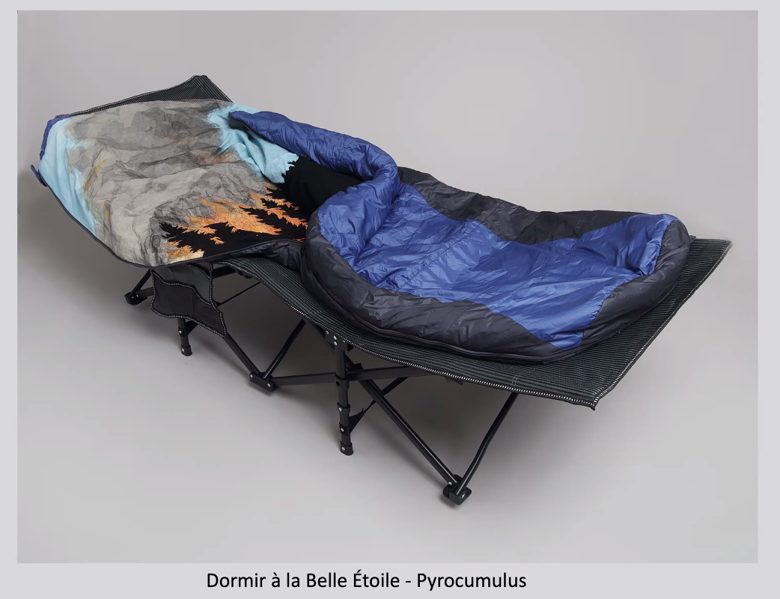
A Canada Council grant enabled Bettina to expand these ideas into a series of interactive works based on camping equipment. Collaborating with a costume and puppet designer, she created textile tents, sleeping bags, and other outdoor forms whose interiors reveal imagery inspired by climate change, extreme weather events, floods, droughts, and wildfires. These works invite viewers to step inside and experience environmental issues from an intimate perspective.
Perhaps among her most thought-provoking projects was a series of altered life jackets. Lined with intricate embroidered images representing essential human needs—such as water, food, shelter, and meaningful work—the pieces explore themes of migration, displacement, and climate refugees. Displayed on mirrored surfaces that resemble water, the installations encourage viewers to see both the embroidered ecosystems and their own reflections, creating a powerful connection between environmental change and human experience.
Bettina also shared her fascination with lichens, tiny organisms that thrive in complex ecological communities. Working closely with researchers at the museum, she studied specimens under a microscope and translated their intricate forms into richly detailed embroideries layered onto weather maps and atmospheric imagery. These works beautifully connect the microscopic and the global, demonstrating how even the smallest living things are linked to larger environmental systems.
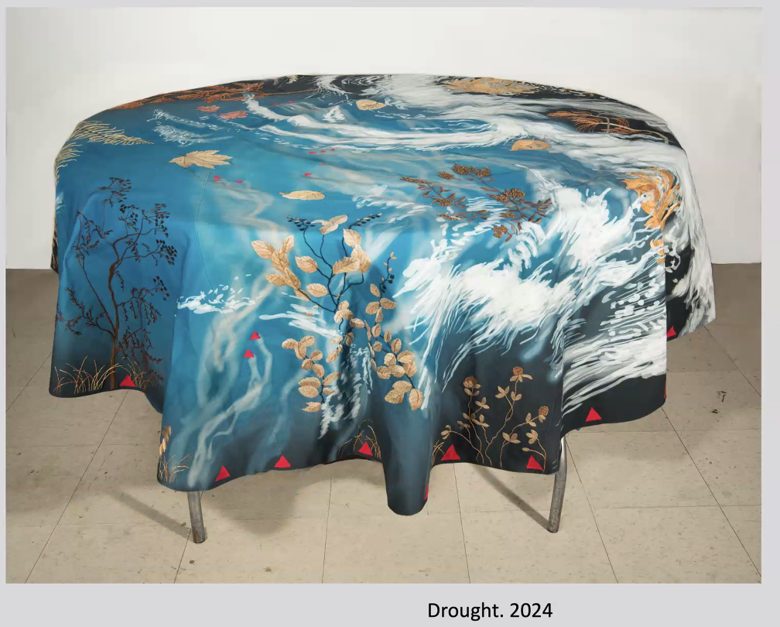
Her most recent large-scale work, an eight-foot textile tablecloth, combines cartographic symbols, climate data, and embroidered imagery addressing drought, wildfire, and ecological disruption. Inspired by the many meanings associated with “coming to the table,” the piece invites conversations about responsibility, collaboration, and collective action in addressing environmental challenges.
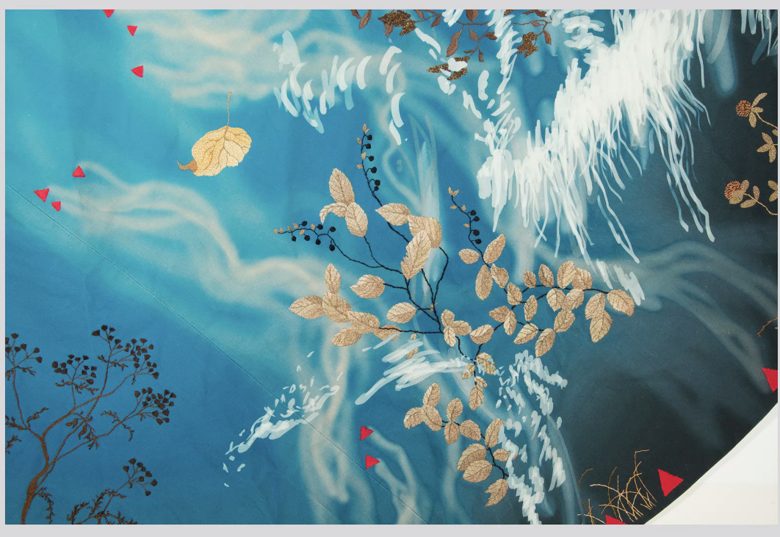
Throughout the presentation, Bettina offered a candid look at her creative process. From preliminary sketches and digital drawings to test samples and full-scale installations, she emphasized the importance of experimentation, collaboration, and persistence. She reminded us that every finished artwork is supported by countless hours of learning, problem-solving, and revision.
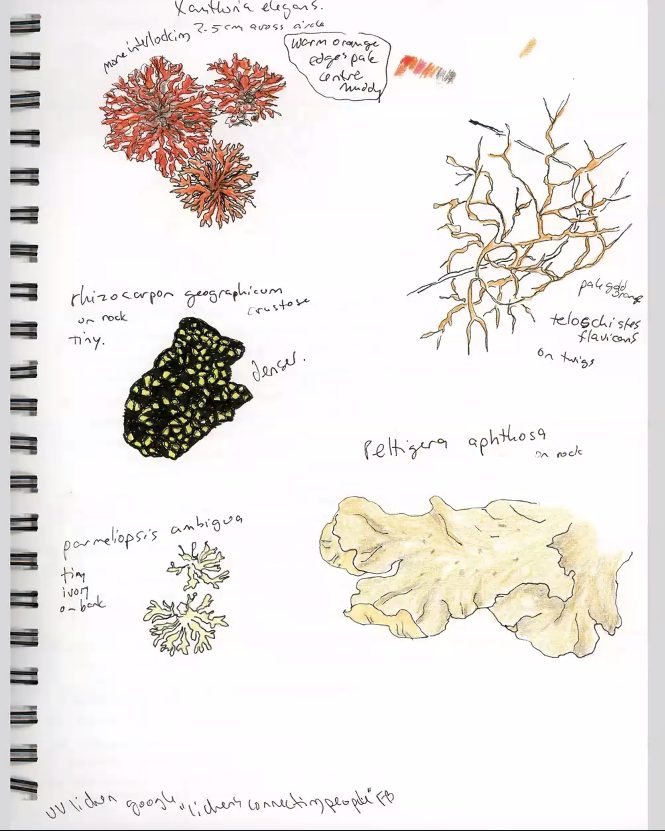
One recurring theme throughout her talk was curiosity. Whether studying weather forecasts, examining lichens under a microscope, collaborating with scientists, or hiking through remote landscapes, Bettina approaches each subject with a desire to learn and to share that knowledge through art. Her enthusiasm for discovery was contagious and provided valuable inspiration for artists and non-artists alike.
We are grateful to Bettina for sharing her remarkable journey and for demonstrating how art can connect science, geography, ecology, and personal experience in meaningful and unexpected ways. Her presentation was a wonderful reminder that creativity begins with paying close attention to the world around us—and finding new ways to tell its stories.
Thank you, Bettina, for an engaging, insightful, and inspiring presentation.